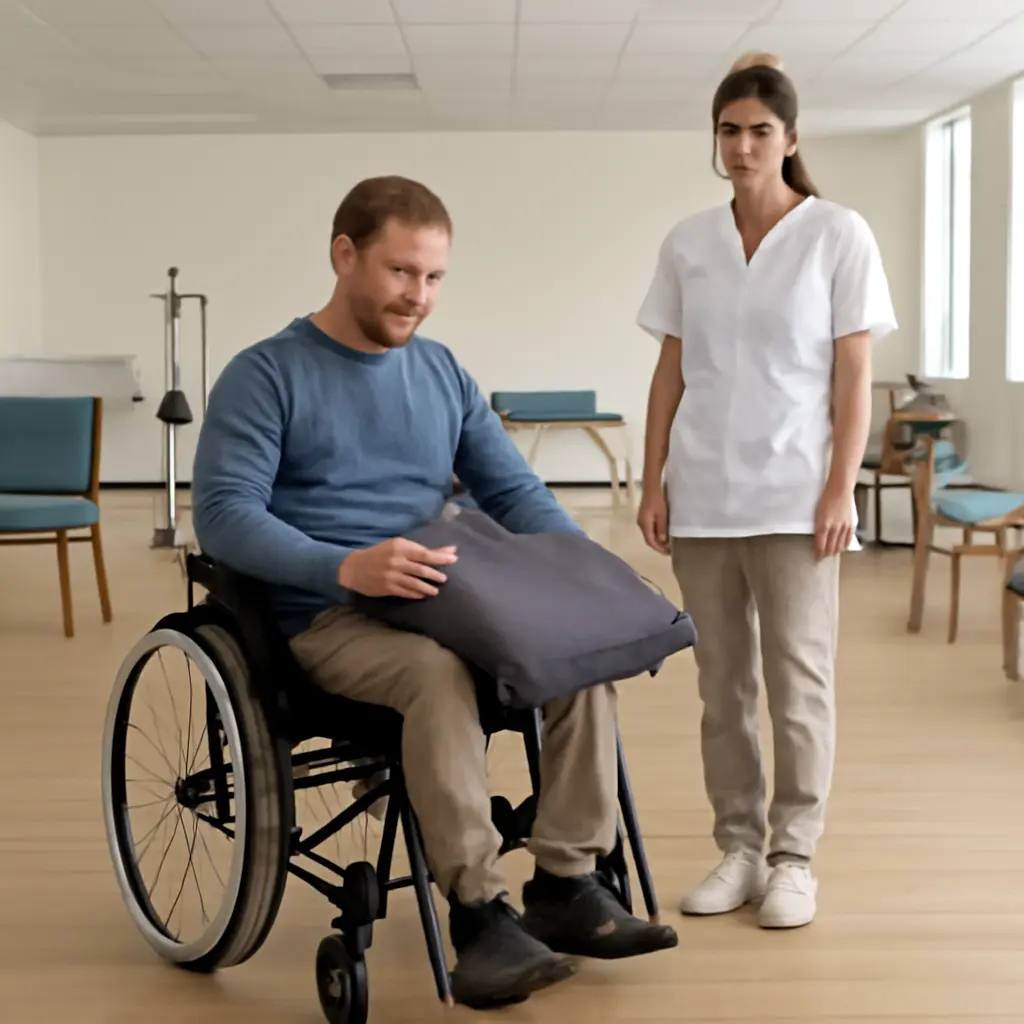
Wheelchair comfort and safety during a long day depend on regular pressure relief, good positioning, hydration, skin checks, and planning for the places you will go. A wheelchair is a mobility device fitted to a person’s needs, and long periods of sitting can raise the risk of discomfort, pressure injuries, fatigue, and pain. The World Health Organization estimates that about 80 million people worldwide need a wheelchair, while clinical guidance emphasizes individualized seating and pressure management. The practical steps below cover posture and pressure relief, daily routines, travel and environment planning, and signs that warrant professional help.
Long-day wheelchair comfort and safety: definition and essentials
Wheelchair comfort and safety describe how well a person’s seating, equipment, habits, and surroundings support their health and mobility throughout daily use. The World Health Organization defines an appropriate wheelchair as one that meets the user’s individual needs and environmental conditions, provides proper fit and postural support, and is safe and durable. This definition matters because there is no universally comfortable setup: body shape, sensation, strength, diagnosis, activity, and the places a person visits all affect what works.
A useful way to organize a long day is to think in connected parts: fit and posture, pressure relief and skin protection, routine self-care, and safe movement through changing environments. A cushion alone cannot make an unsuitable chair safe, and a well-fitted chair still requires regular checks and adjustments. If you have new pain, reduced sensation, a pressure injury, or a major change in health, ask a clinician or seating specialist to review your plan rather than relying on general advice.
Wheelchair types and individualized fit
Manual wheelchairs, power wheelchairs, and specialized seating systems are different types of mobility equipment; each can be configured with features such as adjustable foot supports, back supports, tilt, or recline. A rehabilitation professional or qualified wheelchair service provider can assess seat width and depth, posture, transfers, propulsion needs, and the user’s daily environments. The WHO’s wheelchair-service guidance treats assessment, fitting, training, and follow-up as connected steps—not a one-time purchase—because needs and equipment condition can change over time.
Comfort is a safety concern
Discomfort can be an early signal of pressure, poor positioning, equipment damage, or fatigue. People with limited sensation may not feel a developing skin problem, so visual checks and a regular care routine are particularly important. The U.S. National Pressure Injury Advisory Panel describes a pressure injury as localized damage to skin or underlying tissue, often over a bony area or related to a medical device. Prolonged pressure and shear—when skin and deeper tissue move in different directions—can contribute to injury.
Posture and pressure relief support wheelchair comfort
Posture and pressure relief are the foundation of comfortable sitting over many hours. Pressure is not distributed evenly: areas such as the sitting bones and tailbone can be vulnerable, particularly when a person stays in one position, slides forward, or has poor support. The U.S. National Institute for Health and Care Excellence advises people at high risk of pressure ulcers to change position frequently and at least every six hours, and those at very high risk at least every four hours; these are general prevention recommendations, not a substitute for an individualized wheelchair pressure-relief plan. A clinician may recommend a more frequent schedule based on sensation, skin history, and the person’s ability to reposition.
Use an individualized pressure-relief routine
Pressure relief means changing how body weight rests on the seat so that tissue is not compressed continuously. Depending on a person’s strength, balance, chair, and care plan, this may involve a forward or side lean, a push-up, or a power-chair tilt or recline function. Ask a physical or occupational therapist to demonstrate a technique that is safe for your shoulders and transfers. Set a discreet phone or watch reminder if that helps you follow the schedule recommended for you; do not assume that one technique or interval suits everyone.
Check posture, cushion, and contact points
A stable sitting position helps distribute weight and makes it easier to breathe, reach, and propel or operate the chair. Check that your pelvis is positioned as advised, your feet are supported, and clothing seams, objects, or folded fabric are not creating pressure points. Use the cushion prescribed or selected for your needs, and inspect it for damage, moisture, or incorrect placement. Do not add extra cushions or change seat components without advice: improvised layers can affect stability, positioning, and pressure distribution.
Inspect skin and act on changes
A skin check means looking at areas that bear pressure or rub against equipment, including the hips, buttocks, heels, and areas beneath straps or supports. Use a mirror or ask a trusted person for help if a spot is hard to see. Redness that does not fade after pressure is removed, unusual warmth, swelling, discoloration, a blister, or broken skin deserves prompt medical advice. Skin tones vary, so changes may not appear as obvious redness; pay attention to color, temperature, texture, and sensation compared with the surrounding area.
Daily routines help maintain wheelchair comfort and safety
Long days are easier to manage when basic needs are planned rather than postponed. Meals, fluids, medication, toileting, rest, and pressure relief all influence comfort and concentration. The Centers for Disease Control and Prevention notes that hydration needs vary with factors such as health, activity, and climate; follow your medical team’s guidance, especially if you have a condition that requires fluid limits. A practical routine is a flexible checklist, not a rigid schedule that ignores how you feel.
Plan hydration, meals, and medication
Bring water and food that fit your health needs, and plan accessible stops where you can eat, drink, and take prescribed medication on time. If bladder or bowel management is part of your care, account for supplies, privacy, and accessible facilities. Some people need to coordinate fluid intake with a clinician’s plan; do not increase or restrict fluids solely to avoid restroom visits without medical advice. Keeping essential items within reach can reduce unnecessary strain and help preserve independence.
Manage fatigue, pain, and temperature
Fatigue can build when a day involves repeated propulsion, transfers, or sustained concentration. Alternate demanding tasks with rest where possible, and consider whether a route, pace, or assistance option can reduce effort. Dress for changing conditions and avoid placing hot items against skin that has reduced sensation. New or worsening pain should not be treated as an inevitable part of wheelchair use; it may indicate a fit issue, overuse, illness, or another problem that merits assessment.
Keep a simple equipment-check routine
Before leaving, look for loose parts, damaged tires, unreliable brakes, a poorly secured cushion, or a battery that needs charging. For a power wheelchair, follow the manufacturer’s instructions for charging and operation; for a manual chair, check that wheels and brakes function as intended. If equipment behaves differently or feels unstable, stop in a safe place and arrange repair or professional advice. Routine maintenance supports both comfort and injury prevention.
Travel planning protects wheelchair comfort in changing environments
A comfortable chair can feel very different on uneven pavement, steep ramps, crowded venues, or during a long transfer. Planning ahead helps identify accessible routes, restrooms, seating, charging opportunities, and backup support. The U.S. Access Board’s accessibility standards specify technical requirements for accessible routes and facilities, but real-world conditions can still vary; checking the destination in advance can reduce avoidable barriers.
Prepare routes and accessible stops
Before a long outing, check distances, gradients, doorways, surface conditions, restroom access, and places to rest. Build in extra time for transfers and unexpected detours. If using public transportation, confirm boarding procedures and relevant accessibility details with the operator. A simple itinerary can include a backup accessible location and contact information for someone who can assist if plans change.
Reduce risks during transfers and transport
Transfers should follow the technique taught by a rehabilitation professional or caregiver familiar with your needs. Lock brakes when appropriate, move foot supports out of the way if advised, and avoid pulling on unstable parts of the chair. In vehicles, use an appropriate wheelchair securement and occupant restraint system according to the equipment and vehicle instructions. Never assume that a wheelchair’s positioning belt is a crash-tested vehicle seat belt; ask a qualified supplier or transportation provider about safe travel arrangements.
Plan for weather and unexpected delays
Heat, cold, rain, and delays can affect comfort, skin, batteries, and access to care routines. Carry weather-appropriate layers, necessary medications, a phone charger, and essential care supplies. If you are traveling far from home, identify how to contact the wheelchair supplier or arrange assistance if equipment fails. For air travel, confirm airline procedures and keep critical equipment details and contact information available.
Warning signs call for timely professional support
Persistent pain, skin changes, repeated sliding, numbness, swelling, or a sudden change in how the chair fits are reasons to pause and seek advice. A seating clinic, occupational therapist, physical therapist, rehabilitation physician, or wheelchair supplier may help identify whether the cause is positioning, equipment, health, or a combination. Seek urgent medical care for severe symptoms, rapidly worsening skin damage, signs of infection such as spreading warmth or fever, or any other emergency. Early attention can prevent a small problem from becoming a serious barrier to mobility.
When to request a seating review
Request a seating or equipment review if you have recurring discomfort, new pressure areas, difficulty reaching or propelling, changes in posture, or a chair that no longer fits after weight or health changes. Bring notes about when symptoms occur, what activities make them better or worse, and any skin changes. If available, photographs of a visible skin concern may help a clinician understand its progression, but they do not replace an in-person assessment.
Use a personalized plan rather than a universal rule
A personalized plan should reflect sensation, skin risk, strength, mobility, medical conditions, chair features, and daily routines. One person may need frequent assisted repositioning, while another may use independent weight shifts or power seating. Ask the care team to write down recommended pressure-relief methods, skin-check frequency, equipment adjustments, and who to contact if problems arise. Revisit the plan when health, equipment, or daily activities change.
Conclusion: make long wheelchair days safer and more comfortable
Long-day wheelchair comfort and safety begin with individualized fit, supported posture, and a pressure-relief routine. Regular skin checks, planned hydration and self-care, equipment inspections, and accessible travel arrangements help carry those protections through the day. The broader lesson is that comfort is part of health and participation—not a luxury or an afterthought. Use these steps to start a conversation with your rehabilitation or seating team, and seek prompt advice about new pain, skin changes, or equipment problems.
Sources: World Health Organization, Wheelchair provision guidelines, 2023, https://www.who.int/publications/i/item/9789240074521; World Health Organization, Wheelchair service training package: Basic level, https://www.who.int/publications/i/item/9789241503471; National Pressure Injury Advisory Panel, Pressure Injury Stages, https://npiap.com/page/PressureInjuryStages; National Institute for Health and Care Excellence, Pressure ulcers: prevention and management, https://www.nice.org.uk/guidance/cg179; Centers for Disease Control and Prevention, About Water and Healthier Drinks, https://www.cdc.gov/healthy-weight-growth/water-healthy-drinks/; U.S. Access Board, Guide to the ADA Accessibility Standards, https://www.access-board.gov/ada/guides/