
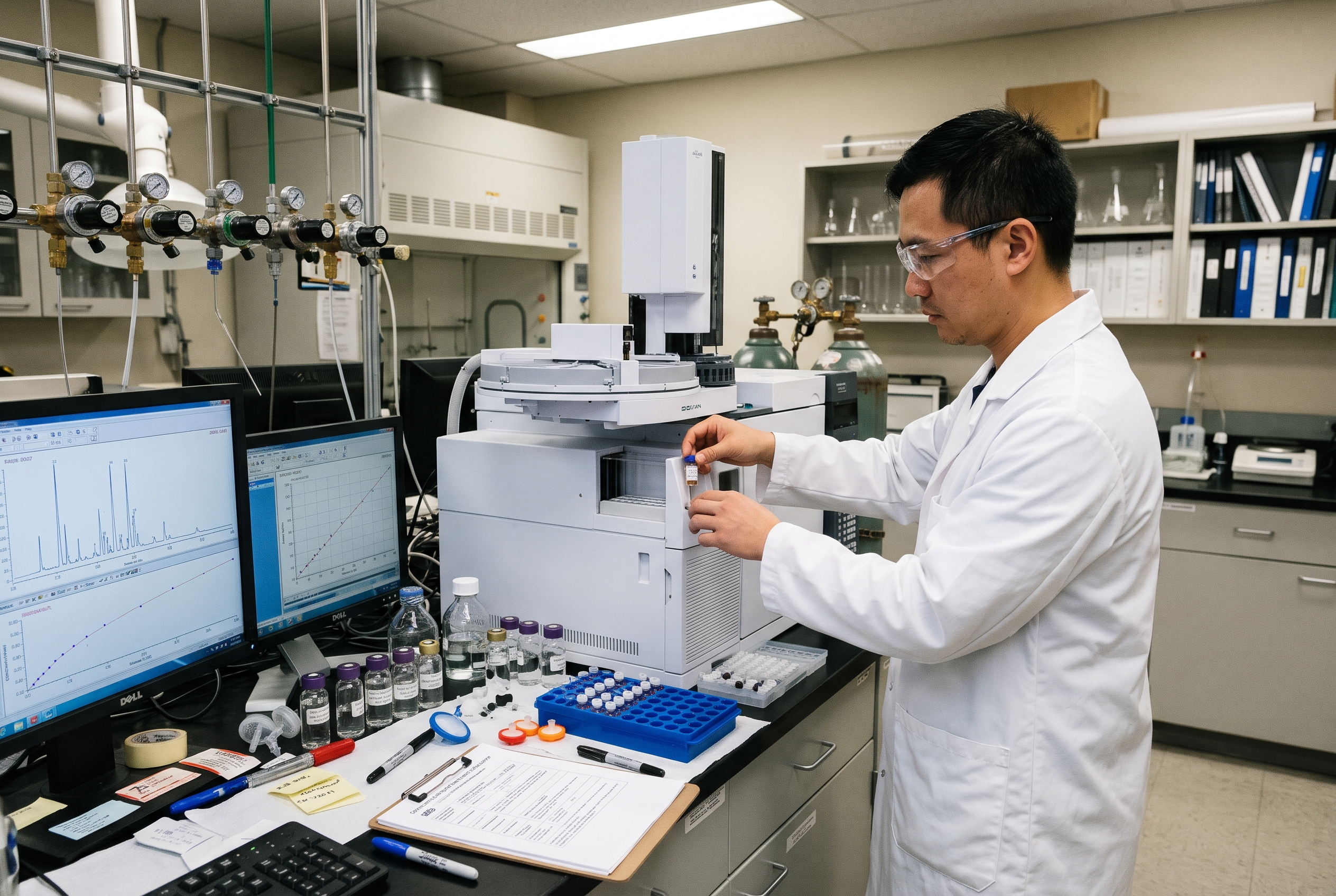
Modern vehicle cabins combine dozens of synthetic polymers, structural adhesives, acoustic foams, and decorative surface wraps inside a compact, sun heated enclosure. When cabin temperatures rise during warm weather parking or prolonged driving, trace monomers, plasticizers, and residual solvents migrate out of interior trim assemblies into the breathing zone. Performing an accredited voc test under internationally recognized automotive protocols gives tier one and tier two suppliers verified emission profiles before components enter global vehicle assembly lines.
By quantifying both volatile organic compounds and semi volatile fogging condensates under standardized thermal conditions, materials engineers prevent windshield hazing, customer odor complaints, and regulatory rejection across international export markets.
Core Analytical Methods and Global Automotive Emission Protocols
Automotive original equipment manufacturers enforce strict chemical limits through distinct sampling and chromatographic methods tailored to material type and assembly scale.
- Thermal Desorption Gas Chromatography Mass Spectrometry under VDA 278: Small solid specimens of plastics, elastomers, and textiles are heated directly inside a thermal desorption tube to separate volatile emissions and semi volatile fogging compounds in a single analytical run. This method rapidly screens raw material batches for residual solvents, antioxidant breakdown products, and plasticizer migration.
- Micro Scale Test Chamber Screening under ISO 12219: Compact heated chambers simulate real cabin airflow, temperature, and humidity ratios over defined conditioning intervals. Analytes are trapped onto sorbent tubes and quantified to measure area specific emission rates for seat covers, headliners, and instrument panel laminates.
- Sampling Bag Total Carbon and Aldehyde Analysis under ISO 12219: Complete subassemblies and molded trim parts are sealed inside inert gas bags filled with purified nitrogen and heated to simulate parked cabin conditions. Gas samples are then analyzed for total volatile organic carbon alongside high performance liquid chromatography for formaldehyde, acetaldehyde, and acrolein.
- Gravimetric and Reflectometric Fogging Evaluation: High boiling point plasticizers and mold release agents can condense onto cool windshield glass as an oily film that scatters oncoming headlights. Controlled heating of specimens beneath cooled glass plates measures both light reflectance loss and condensate mass to confirm long term optical safety.
Interior Trim Suppliers Relying on Standardized Emission Verification
Documented emission compliance is mandatory for suppliers delivering parts into passenger, commercial, and electric vehicle platforms worldwide.
- Cockpit, Instrument Panel, and Center Console Molders: Injection molders producing polypropylene, acrylonitrile butadiene styrene, and polycarbonate trim verify that color masterbatches, flame retardants, and mold release sprays remain below strict OEM substance thresholds.
- Automotive Seating, Foam, and Textile Producers: Polyurethane foam casters, synthetic leather coaters, and acoustic carpet mills validate amine catalyst selection and backing adhesives to eliminate lingering chemical odors inside enclosed passenger cabins.
- Interior Adhesive, Sealant, and Tape Formulators: Chemical manufacturers supplying pressure sensitive mounting tapes, headliner laminating glues, and sound deadening pads confirm low outgassing performance across extreme summer heat cycles.
- Electric Vehicle Cabin Module Integrators: Makers of battery cooled HVAC ducts, wireless charging pads, and ambient lighting housings audit thermal stability so localized electronic warmth does not trigger elevated cabin vapor release.
Aligning interior component emissions with international vehicle air quality regulations protects brand reputation and clears regulatory hurdles across export markets. By commissioning an accredited voc test through an Alstesting Laboratory Testing service in Malaysia, automotive interior manufacturers and material formulators gain reliable analytical certification to support regional and global supply chain compliance.
Frequently Asked Questions (FAQ)
What is the difference between VOC and FOG values in automotive VDA 278 testing?
The VOC value measures lower boiling point volatile organic compounds released when a material is heated to 90 degrees Celsius, representing substances that readily enter cabin air as vapors. The FOG value measures higher boiling point semi volatile compounds released at 120 degrees Celsius, representing heavier substances prone to condensing as a film on interior glass surfaces.
Why are aldehydes such as formaldehyde tested separately using liquid chromatography?
Low molecular weight aldehydes like formaldehyde and acetaldehyde are highly reactive, polar compounds that are difficult to quantify accurately alongside standard hydrocarbons on a conventional gas chromatography column. Trapping them onto dinitrophenylhydrazine cartridges followed by high performance liquid chromatography provides sensitive, interference free measurement down to trace microgram levels.
How does sample storage and packaging affect automotive emission test results?
If molded plastic or foam parts are left unwrapped in open warehouse air before testing, volatile compounds can evaporate prematurely and produce artificially low readings, or the parts can absorb outside fumes. Samples should be sealed immediately after production in clean, odorless aluminum foil lined barrier bags to preserve their true as manufactured emission state.


