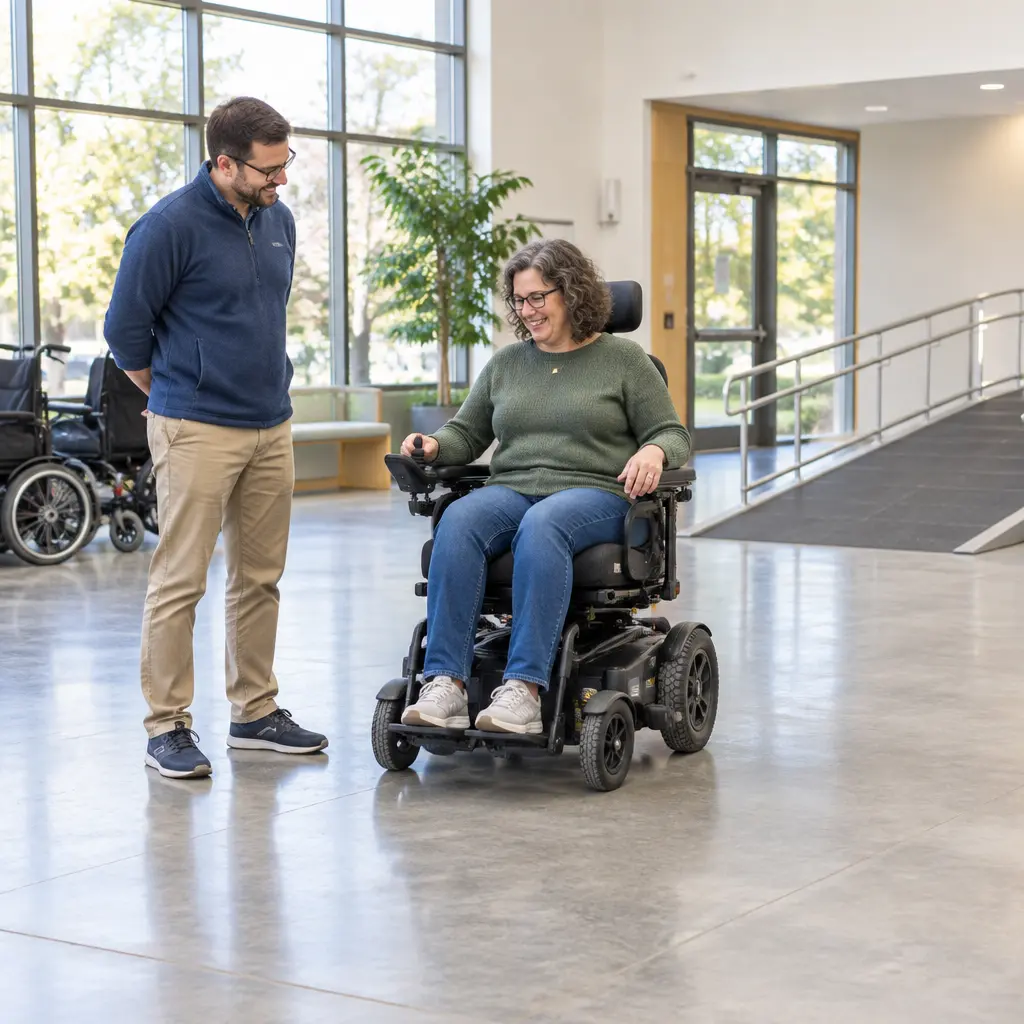
A wheelchair is a mobility device selected to support a person’s movement, posture, and daily activities; it may be manual or powered, basic or individually configured. Buying mistakes are costly because a chair that does not fit or suit its user can make mobility, comfort, and everyday tasks harder. The World Health Organization estimates that 80 million people worldwide need a wheelchair, while access to one that meets individual needs remains limited. Avoid common errors by assessing function and fit, comparing the complete cost, arranging a real-world trial, and checking service and funding before committing.
Choosing wheelchair technology through a user-centered assessment
A wheelchair assessment is a structured evaluation of a person’s abilities, goals, environment, and equipment needs. The WHO’s wheelchair provision guidance treats selection as part of a process that includes individual assessment, fitting, training, and follow-up—not simply choosing a product from a catalog. The central buying mistake is therefore starting with the chair rather than the person who will use it.
Relevant considerations include mobility and transfer ability, posture and pressure risk, strength and endurance, daily travel, transportation, home access, and the user’s preferences. A clinician or qualified seating and mobility professional can help translate those needs into a specification. The result may be a manual chair, a power chair, a properly configured off-the-shelf model, or a custom seating system.
Mistake: Choosing by chair type or price alone
A chair’s category does not establish that it is appropriate. Manual wheelchairs rely on the user or a helper for propulsion; power wheelchairs use powered drive, while scooters have different seating, control, and maneuverability characteristics. Within each category, weight, dimensions, controls, seating, and intended terrain vary. A low purchase price may also omit essential cushions, supports, batteries, delivery, or fitting.
The WHO’s wheelchair guidance emphasizes matching an appropriate wheelchair to a person’s needs and environment. Ask for a written comparison of suitable options, including what each model can and cannot do, rather than selecting by appearance, brand, or advertised features alone.
Mistake: Skipping a professional assessment
A professional assessment connects functional needs to equipment choices. It should consider how the person sits and moves throughout the day, whether they can operate the controls safely, and what support they need for transfers and pressure management. The assessment should also include caregivers when they help with propulsion, lifting, transport, or maintenance.
This step can prevent a mismatch between the user and the device—for example, a chair that is difficult to propel over the user’s usual routes or a power chair whose controls are not accessible. Ask the supplier or health professional how assessment findings will be documented and used to determine the final configuration.
Avoiding wheelchair fit and seating mistakes
Wheelchair fit describes how the chair’s dimensions and seating components support the user’s body and intended activities. It affects comfort, posture, reach, transfers, and the ability to propel or control the chair. A chair that appears close enough in a showroom may still be unsuitable after prolonged daily use.
The U.S. National Institute for Occupational Safety and Health (NIOSH) identifies wheelchair fit and posture as important considerations for safe, effective use. Seat width and depth are only part of the fit: back support, footrests, arm supports, cushion, and control placement also matter. These features should be considered together, not purchased as disconnected accessories.
Mistake: Guessing dimensions or buying without a fitting
A fitting checks whether the user can sit with appropriate support and reach the components they need. Guessing seat dimensions from clothing size or a brief visual check risks selecting a chair that is too narrow, too wide, too deep, or poorly suited to the user’s posture. Growth, weight changes, clothing, and the cushion can also affect the final fit.
Have the supplier or seating professional confirm measurements with the intended cushion and accessories in place. During a fitting, check foot support, arm position, reach to controls, stability, and ease of transfers. For a growing child or someone whose condition changes, ask how fit will be monitored and adjusted over time.
Mistake: Treating the cushion and pressure management as optional
A wheelchair cushion is a seating component selected for comfort, posture, and pressure management. Different materials and designs behave differently, and no cushion is automatically right for every user. Pressure-injury prevention also depends on factors such as skin condition, sensation, mobility, positioning, and the user’s ability to shift weight.
The U.S. National Institute of Diabetes and Digestive and Kidney Diseases notes that people with spinal cord injuries may be at risk of pressure sores and should follow individualized prevention guidance. Ask a qualified clinician to assess cushion needs and explain skin checks and pressure-relief practices. Do not assume that a soft cushion alone removes risk or that a generic cushion will provide the support required.
Matching wheelchair features to daily activities and surroundings
A wheelchair’s functional match is the degree to which its configuration works for a person’s real routines and environments. Those may include narrow hallways, ramps, uneven sidewalks, public transport, work, school, or vehicle transfers. A feature that is useful in one setting can add weight, cost, or complexity in another.
The WHO’s wheelchair provision approach includes consideration of the user’s environment, reinforcing that specifications should reflect where and how the chair will be used. Before buying, list frequent routes and activities, then test relevant features rather than relying on a product description.
Mistake: Overlooking home access and transportation
A wheelchair that fits the user may still fail to fit the home or vehicle. Door widths, turning space, thresholds, ramps, bathroom access, storage, and charging access can affect everyday use. For transportation, the chair’s folded or assembled dimensions, weight, tie-down compatibility, and transfer arrangements matter.
Measure important spaces and verify vehicle requirements before ordering. If the chair will be used on public transit or secured in a vehicle, confirm applicable accessibility and securement needs with the transit provider or a qualified specialist. Do not infer that a chair is safe for occupied transport solely because it can be loaded into a vehicle.
Mistake: Buying power, terrain, or portability features without testing
Power options such as drive controls, batteries, suspension, and seating functions should be chosen for the user’s abilities and routine. A powerful chair may be unnecessarily difficult to transport or maneuver in tight spaces; a portable model may not provide the range, support, or terrain performance needed. Manual chairs also differ in propulsion effort, frame weight, and handling.
Request a supervised trial in conditions similar to everyday use, including turning, stopping, ramps, doorways, and the surfaces the user regularly encounters. For power equipment, ask the supplier to explain charging, realistic range, battery replacement, and what happens if the chair loses power. For manual equipment, test propulsion and caregiver handling over a meaningful distance.
Planning wheelchair costs, funding, and aftercare
The total cost of wheelchair ownership includes more than the initial price. It may include assessment, fitting, seating components, delivery, repairs, replacement parts, batteries, accessories, and future adjustments. Looking only at the sticker price can conceal expenses that determine whether the chair remains useful and safe.
In the United States, Medicare’s wheelchair and scooter coverage rules generally require medical-necessity documentation and prior approval for certain power mobility devices. Coverage depends on the individual’s circumstances and the specific equipment; a recommendation does not guarantee payment. Other countries and insurers have their own requirements, so verify the process with the relevant payer and supplier before placing an order.
Mistake: Ignoring the full cost and funding rules
A complete quote should identify the chair, seating and positioning components, accessories, fitting, delivery, training, and warranty. Ask which items are included, which are optional, and which may be reimbursed. Confirm whether a funding program requires a particular supplier, assessment, prescription, or prior authorization.
The Centers for Medicare & Medicaid Services publishes coverage information for mobility assistive equipment, while Medicare advises beneficiaries to check coverage and supplier requirements before obtaining equipment. Keep written estimates and approval records, and ask what happens if a requested feature is denied or needs an appeal.
Mistake: Failing to check repairs, warranty, and follow-up
Aftercare includes training, adjustment, maintenance, and access to repair service. A chair that cannot be repaired promptly may leave its user without essential mobility. Before purchase, ask who handles repairs, typical response times, whether loan equipment is available, and how warranty coverage treats batteries, electronics, upholstery, and wear parts.
The WHO’s provision model includes follow-up after delivery, because a fitting and initial handover are not the end of the process. Arrange a follow-up to address comfort, control access, posture, and any problems noticed during everyday use. Keep the user manual, service records, configuration details, and supplier contact information together.
A practical checklist before buying wheelchair technology
A short checklist can make comparisons clearer and reduce the risk of buying a chair that is unsuitable, unaffordable to maintain, or difficult to service.
- Complete an assessment with a qualified seating and mobility professional.
- Define the user’s goals, daily routes, transfer needs, and caregiver role.
- Confirm fit and seating with the intended cushion and accessories.
- Trial the chair in relevant spaces and on representative surfaces.
- Measure home access and verify transport, storage, and charging needs.
- Compare full written quotes, funding requirements, warranties, and repair support.
- Plan for training, follow-up, maintenance, and changing needs.
A simple comparison table can help: list each candidate chair in one column and compare fit, comfort, mobility, environment, transport, total cost, and service in the others. This makes trade-offs visible and gives the user and care team a concrete basis for discussion.
Conclusion: Make wheelchair technology fit the person
The most avoidable wheelchair buying mistakes are choosing by category or price alone, skipping assessment and fitting, overlooking seating and pressure needs, failing to test the chair in real environments, and neglecting total cost and aftercare. A user-centered assessment, accurate fit, practical trial, verified funding, and reliable service help turn a purchase into a mobility solution that works in everyday life.
Before ordering, ask the user and their qualified mobility team to review the specifications together, obtain a complete written quote, and confirm the follow-up plan. For further guidance, consult the WHO wheelchair provision resources and the relevant national health coverage and equipment standards.
Sources: World Health Organization, Wheelchair provision guidelines, 2023, https://www.who.int/publications/i/item/9789240074521; World Health Organization, Wheelchair provision and population estimates, https://www.who.int/news-room/fact-sheets/detail/assistive-technology; National Institute for Occupational Safety and Health, Safe patient handling and mobility resources, https://www.cdc.gov/niosh/healthcare/risk-factors/patient-handling.html; National Institute of Diabetes and Digestive and Kidney Diseases, Preventing Pressure Sores, https://www.niddk.nih.gov/health-information/urologic-diseases/spinal-cord-injury/pressure-sores; Centers for Medicare & Medicaid Services, Mobility Assistive Equipment, https://www.medicare.gov/coverage/wheelchairs-scooters; Medicare, Wheelchairs and scooters, https://www.medicare.gov/coverage/wheelchairs-scooters.