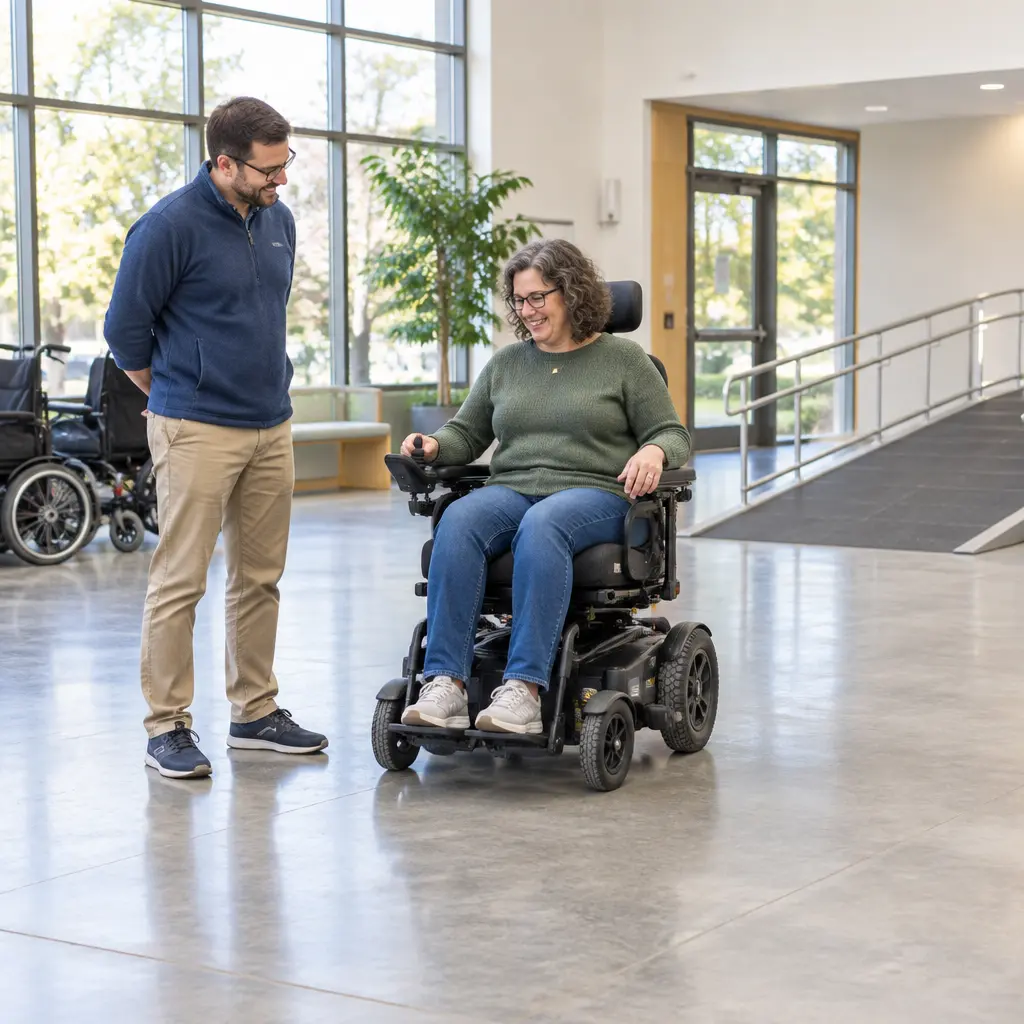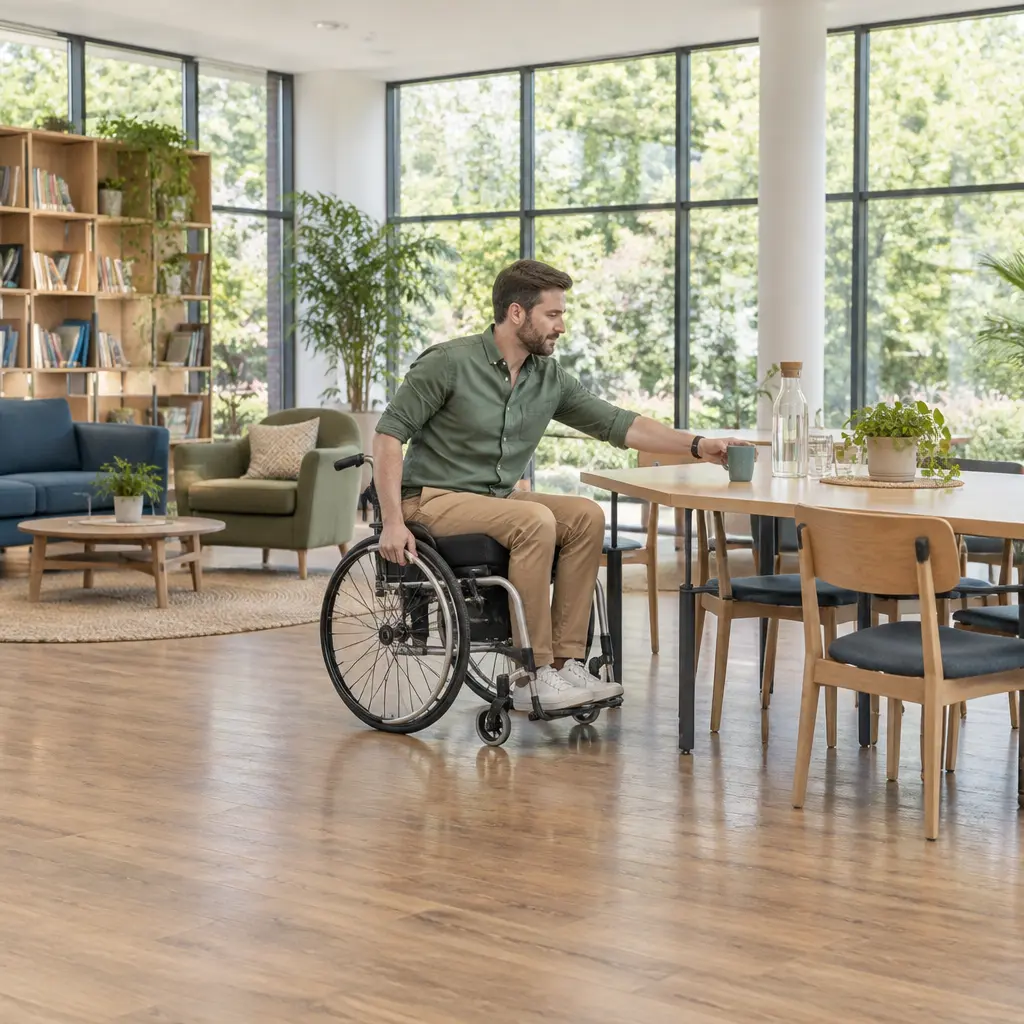
A good wheelchair seating cushion supports posture, distributes pressure, manages heat and moisture, and fits both the person and the wheelchair. The right choice depends on an individual’s body, mobility, skin risk, daily activities, and ability to reposition—not simply on a cushion’s material or price. The World Health Organization estimates that 80 million people worldwide need a wheelchair, underscoring the importance of effective seating. This guide explains how to assess fit, compare foam, air, and fluid designs, understand pressure-injury prevention, and arrange professional evaluation and follow-up.
Pressure management defines a good wheelchair seating cushion
A wheelchair seating cushion is a removable support surface placed between a person and the wheelchair seat. The Rehabilitation Engineering and Assistive Technology Society of North America (RESNA) describes wheelchair seating and positioning as a means of supporting posture, function, comfort, and skin protection. A good cushion therefore is not just “soft”: it should fit the user, maintain stable support, and suit their skin-protection and mobility needs.
Pressure-injury prevention matters because prolonged pressure and shear can damage skin and underlying tissue, especially over bony areas such as the pelvis. The National Pressure Injury Advisory Panel (NPIAP) emphasizes that pressure injuries arise from pressure and shear, with risk affected by factors including mobility, sensation, circulation, and moisture. No cushion can eliminate that risk by itself; regular skin checks, appropriate positioning, and a broader care plan remain important.
Pressure redistribution and pelvic support
Pressure redistribution means spreading body load across a larger contact area while avoiding excessive pressure at vulnerable points. A properly selected cushion supports the pelvis without forcing it into an unstable or uncomfortable position. It should also help keep the thighs supported and the feet appropriately placed, since poor alignment elsewhere can affect pelvic posture and increase sliding or shear.
There is no single pressure measurement that proves a cushion is right for every user. Clinicians consider posture, skin history, sensation, sitting tolerance, transfers, and daily routines alongside any pressure-mapping results. Pressure mapping can help visualize how load is distributed during an assessment, but it is one tool—not a substitute for clinical judgment or skin monitoring.
Fit, stability, and functional access
A cushion’s width and depth should match the wheelchair and the user’s measurements. An ill-fitting cushion may leave inadequate thigh support, interfere with the chair’s sides, or make transfers harder. Its height and shape also affect seat-to-floor height, footrest position, armrest alignment, and the user’s ability to reach a desk or propel a manual wheelchair.
A good fit balances immersion—the degree to which the body settles into a cushion—with stability. A highly contoured or soft cushion may help some users but make transfers or independent repositioning more difficult for others. Assessment should therefore include real tasks such as reaching, turning, transferring, and sitting through a typical day.
Cushion materials shape comfort and care requirements
Cushions are commonly grouped by their principal support material: foam, air, fluid or gel, and hybrid designs. These categories differ in how they redistribute load, respond to movement, and require maintenance. The material alone does not determine performance: construction, contour, cover, fit, and the user’s ability to care for the cushion also matter.
Foam cushions
Foam cushions use resilient or contoured foam to support the pelvis and thighs. They can be relatively light, straightforward to use, and available in many shapes and firmness levels. Basic foam may suit people who need modest positioning support, while contoured or layered designs can provide more targeted support.
Foam can compress, lose resilience, or become damaged over time, so condition and fit should be checked regularly. A cushion that has flattened, torn, or no longer supports the user as intended may need reassessment. Foam is not automatically the best low-cost choice if it fails to meet the person’s skin-protection or positioning needs.
Air-cell cushions
Air-cell cushions use interconnected or individually configured air spaces to support the body and redistribute pressure. They can be useful for people with significant pressure-injury risk, but they require correct inflation and routine checks. Too much or too little air can undermine support and stability.
Users or caregivers should follow the manufacturer’s instructions for inflation, inspection, and cleaning. A puncture, valve problem, or unnoticed change in inflation can compromise performance. People who have difficulty checking or maintaining the cushion may need a simpler design or a reliable support plan.
Fluid, gel, and hybrid cushions
Fluid or gel cushions combine a fluid-filled component with a supporting base, while hybrid cushions combine materials such as foam and air. Their purpose is to balance pressure redistribution, stability, comfort, and positioning. These designs vary substantially, so the label “gel” or “hybrid” alone does not indicate how well a cushion will suit a particular user.
Some fluid designs are heavier than foam, and their inserts may shift or require periodic redistribution according to the manufacturer’s directions. Hybrid designs can offer a compromise between support and pressure management, but they still need correct sizing and regular inspection. A seating professional can compare specific models in the context of the user’s posture, skin history, and daily routine.
Individual assessment determines cushion suitability
The best cushion is selected through an individualized assessment rather than a universal ranking. The RESNA position on wheelchair seating and positioning supports considering the person, the seating system, and the activities the system must enable. A physician, occupational therapist, physical therapist, or other qualified seating professional can help evaluate needs and coordinate equipment selection.
Skin risk, sensation, and repositioning
People with a history of pressure injuries, reduced sensation, limited mobility, poor circulation, or difficulty repositioning may need more specialized pressure management and closer follow-up. NPIAP guidance treats pressure-injury prevention as a combination of risk assessment, skin care, repositioning, and appropriate support surfaces—not a product-only solution.
A cushion should be considered alongside a practical repositioning routine and regular skin inspection. New persistent redness, discoloration, warmth, pain, or skin breakdown warrants prompt attention from a healthcare professional. People with reduced sensation may not feel early warning signs, making visual checks particularly important.
Posture, mobility, and daily activities
A cushion should support the user’s posture without unnecessarily restricting movement. A person who self-propels, transfers independently, or spends long periods at a work surface may need different features from someone whose chair is primarily pushed by a caregiver. Cushion height, contour, and stability can influence reach, balance, transfer technique, and propulsion.
For example, a person who slides forward may need assessment of pelvic positioning, foot support, and seat angle rather than simply a grippier cushion cover. A person with fragile skin and limited sensation may instead need a more protective support surface and a dependable inspection routine. These are assessment examples, not prescriptions; individual recommendations require clinical evaluation.
Climate, continence, and cushion care
Heat, perspiration, and moisture from incontinence can affect comfort and skin condition. The cover should be compatible with the user’s needs and the cushion manufacturer’s cleaning instructions. A waterproof cover may help protect the cushion, but it should not be assumed to solve moisture-related skin risk on its own.
Care routines should account for cleaning, drying, inspection, and replacement. Check seams, covers, valves, inserts, and foam for damage, contamination, or changes in support. Follow the manufacturer’s guidance rather than using cleaning methods that could degrade the materials.
Trial, maintenance, and follow-up protect performance
A cushion’s suitability should be verified in the wheelchair and during the activities for which it will be used. A trial can reveal problems that are not obvious from a product description, including sliding, poor thigh support, discomfort, transfer difficulty, or a change in reach. Reassessment is especially important after changes in body weight, posture, skin condition, medical status, or wheelchair configuration.
A practical evaluation checklist
- Confirm the cushion’s dimensions and orientation match the wheelchair and user.
- Check that the pelvis and thighs are supported and the user can maintain a stable, comfortable position.
- Test everyday activities, including reaching, propulsion, and transfers where applicable.
- Review inflation, cleaning, inspection, and replacement instructions with the user or caregiver.
- Agree on skin-monitoring and follow-up plans with the relevant healthcare professional.
When to request reassessment
Seek a seating review if the cushion becomes damaged or flattened, the user begins sliding or leaning, sitting becomes painful, transfers become harder, or skin changes appear. A new diagnosis or change in mobility can also alter seating needs. Timely review can identify whether the cushion, its setup, or the wider seating system needs adjustment.
Conclusion: a good wheelchair seating cushion is person-specific
A good wheelchair seating cushion combines appropriate pressure redistribution, fit, posture support, comfort, and manageable care. Foam, air, fluid, and hybrid designs each have potential advantages and limitations, but none is universally best. Skin risk, sensation, mobility, transfers, climate, and the user’s daily activities should guide selection, followed by a real-world trial and regular reassessment.
If you or someone you support uses a wheelchair, arrange an assessment with a qualified seating professional, review skin-check practices with a healthcare provider, and follow the cushion manufacturer’s care instructions. The right seating system can support safer, more comfortable participation in everyday life.
Sources: World Health Organization, Wheelchair provision, https://www.who.int/news-room/fact-sheets/detail/wheelchair-provision; Rehabilitation Engineering and Assistive Technology Society of North America, RESNA Position on the Application of Wheelchairs, Seating Systems, and Accessories, https://www.resna.org/Portals/0/Documents/Position%20Papers/RESNA%20Position%20on%20the%20Application%20of%20Wheelchairs%20Seating%20Systems%20and%20Accessories.pdf; National Pressure Injury Advisory Panel, Pressure Injury Prevention, https://npiap.com/page/Prevention