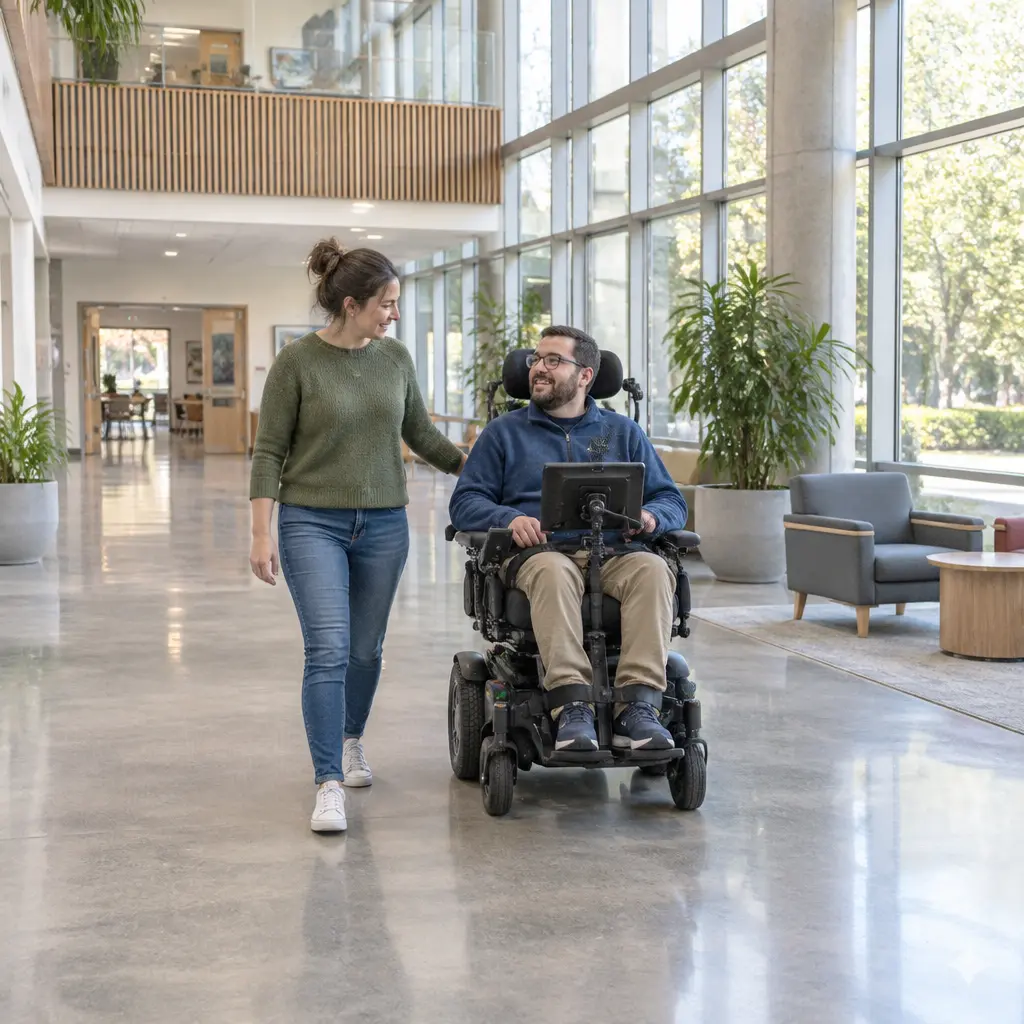
Smart wheelchairs are powered mobility devices that combine a conventional electric wheelchair with sensors, computing, and control systems to help a person move through their environment. By supporting navigation, obstacle awareness, customizable controls, and connections to assistive technology, they can make everyday routines—from getting dressed and preparing meals to attending appointments—more manageable. The World Health Organization estimates that 80 million people worldwide need a wheelchair, while access to appropriate products remains uneven. Smart features may help address some mobility barriers, but their usefulness depends on the person, setting, training, reliability, and cost.
Smart wheelchair technology supports daily-routine mobility
A smart wheelchair is not one single design. The term describes powered wheelchairs enhanced with technologies such as obstacle-detection sensors, computer-assisted steering, route guidance, or alternative controls. These features are intended to support mobility and access; they do not make every environment accessible or remove the need for individualized assessment.
The WHO’s 2023 wheelchair provision guidance emphasizes that wheelchair services should match products to users’ needs and environments, with fitting, training, and follow-up. That principle matters for daily routines: a feature that works in a wide hallway may be unhelpful in a cramped kitchen, and a control interface must suit the user’s movement and communication abilities.
Smart wheelchair navigation supports daily routines
Navigation refers to how a wheelchair user selects and follows a path while controlling the chair. In smart wheelchairs, navigation may be manual, assisted, or more highly automated. The U.S. National Institute of Biomedical Imaging and Bioengineering describes assistive technologies as devices and systems that support functional abilities; in this context, navigation features can supplement a user’s control rather than replace it.
Obstacle detection and collision avoidance
Obstacle detection uses sensors—such as cameras, ultrasonic sensors, or depth sensors—to identify nearby objects. Depending on the system, it may warn the user, limit movement toward an obstacle, or help steer around it. This can be useful when navigating doorways, furniture, or busy indoor spaces, but sensors can misread reflective surfaces, clutter, uneven ground, or objects outside their field of view. Users still need to judge whether a route is safe.
The National Institute on Disability, Independent Living, and Rehabilitation Research has supported research into smart and powered mobility, including work on navigation and safety. Research findings should be interpreted in context: performance in a controlled test does not guarantee equivalent performance in a home, workplace, or public setting.
Assisted and semi-autonomous navigation
Assisted navigation modifies a user’s steering input to help with a specific task, such as passing through a narrow opening or avoiding an obstacle. Semi-autonomous systems may allow a user to select a destination or direction while the chair manages parts of the route. These options can reduce the effort required for some maneuvers, especially for people who have difficulty operating a standard joystick.
For example, a user may steer manually across an open room, then use an assistance mode to approach a table or pass through a doorway. The best level of automation is individualized: users should retain meaningful control, understand when assistance is active, and be able to stop or override the system.
Smart wheelchair controls support personal independence
Control technology is the interface through which a person directs a wheelchair. Smart chairs may combine a joystick with alternative input methods, programmable settings, or connections to other assistive devices. The aim is to match the control method to a person’s motor, sensory, and cognitive abilities—not to assume that one interface suits everyone.
Alternative access methods
Alternative controls can include head arrays, switches, sip-and-puff systems, touch interfaces, or eye-gaze access, depending on the chair and the user’s assessment. These methods can help people who cannot reliably operate a conventional joystick. A rehabilitation team typically considers posture, range of motion, fatigue, vision, communication, and the environments where the chair will be used.
The WHO’s wheelchair service framework treats assessment, fitting, and training as connected parts of provision. This is particularly relevant to alternative controls: positioning and calibration affect whether a user can steer accurately and comfortably throughout a routine, rather than only during a short demonstration.
Personalized settings and routine-based use
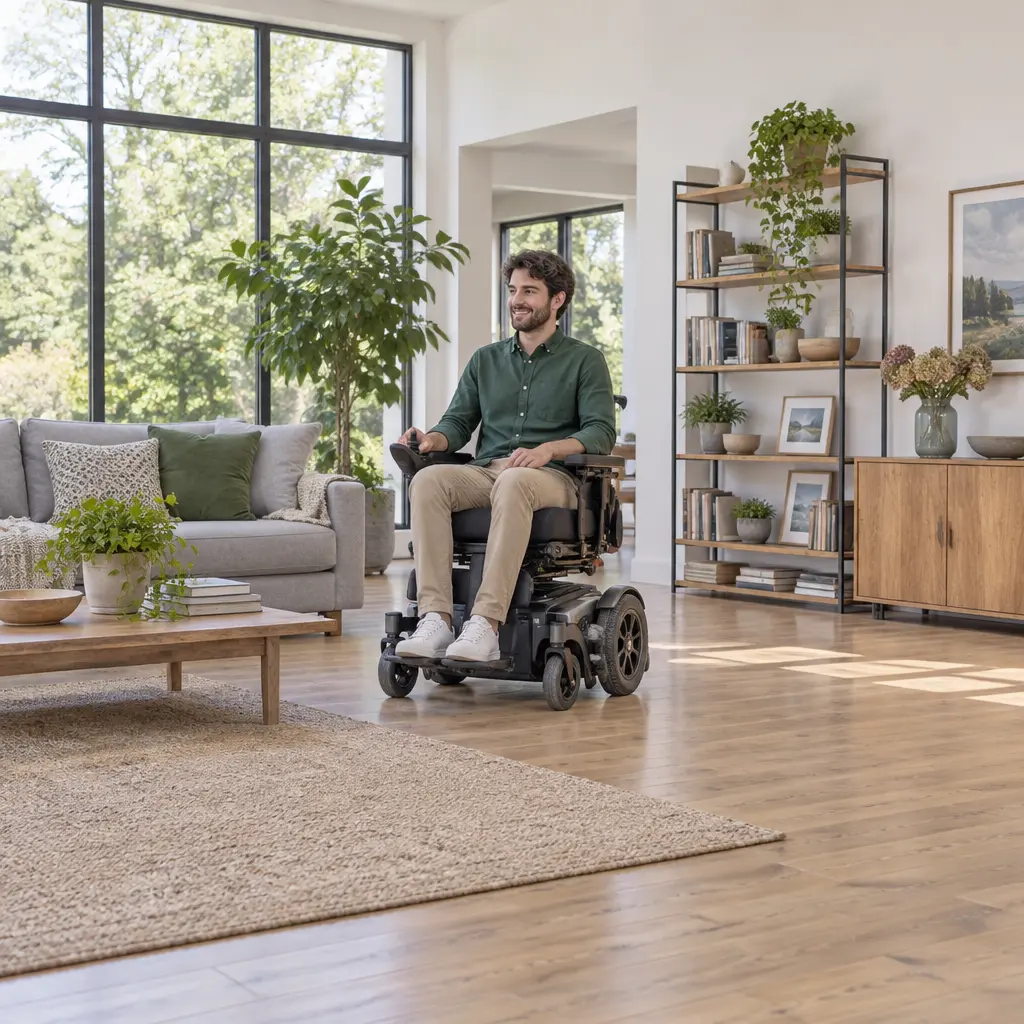
Programmable settings can adjust elements such as speed, acceleration, and joystick response. A user might select a gentler setting indoors and a different setting outdoors, if the chair supports it and the clinician or supplier has configured it safely. Consistent settings can make familiar tasks—moving between rooms, approaching a desk, or positioning beside a bed—more predictable.
Personalization should be reviewed when a person’s abilities, seating, health, or surroundings change. A setting that supports independence in one context may create risk in another, so adjustments should be made with appropriate professional guidance.
Smart wheelchair connectivity can support daily activities
Connectivity links a wheelchair with other assistive or digital systems. Depending on the equipment, this may include environmental controls, communication devices, or software used to configure the chair. These connections can help users manage multiple daily tasks from an accessible position, but compatibility and dependable operation are essential.
Environmental control and assistive technology
Environmental control systems let a user operate compatible devices such as doors, lights, or powered equipment. When integrated with an appropriate access method, they may support tasks like entering a room or adjusting lighting without needing to reach a conventional switch. This is distinct from wheelchair navigation: the chair provides mobility, while environmental controls operate devices around the user.
The U.S. National Institute on Disability, Independent Living, and Rehabilitation Research funds work on technology and disability that reflects the importance of usability and participation. In practice, an integrated setup should be tested in the user’s actual home or workplace, because device compatibility, network coverage, and control placement can affect whether it helps with routine tasks.
Communication and access to services
Some wheelchair systems can be used alongside augmentative and alternative communication devices or accessible mobile technology. This can support communication while moving through a routine, such as contacting a caregiver or checking appointment information. A wheelchair should not be assumed to include these functions automatically; they may require separate equipment and configuration.
Smart wheelchair adoption depends on fit, safety, and support
Smart features are only beneficial when they suit the user and can be maintained. A powered wheelchair is a medical and mobility device, and its setup involves more than purchasing a technology package. Assessment, training, repair access, battery management, and environmental fit all influence everyday reliability.
Assessment, training, and follow-up
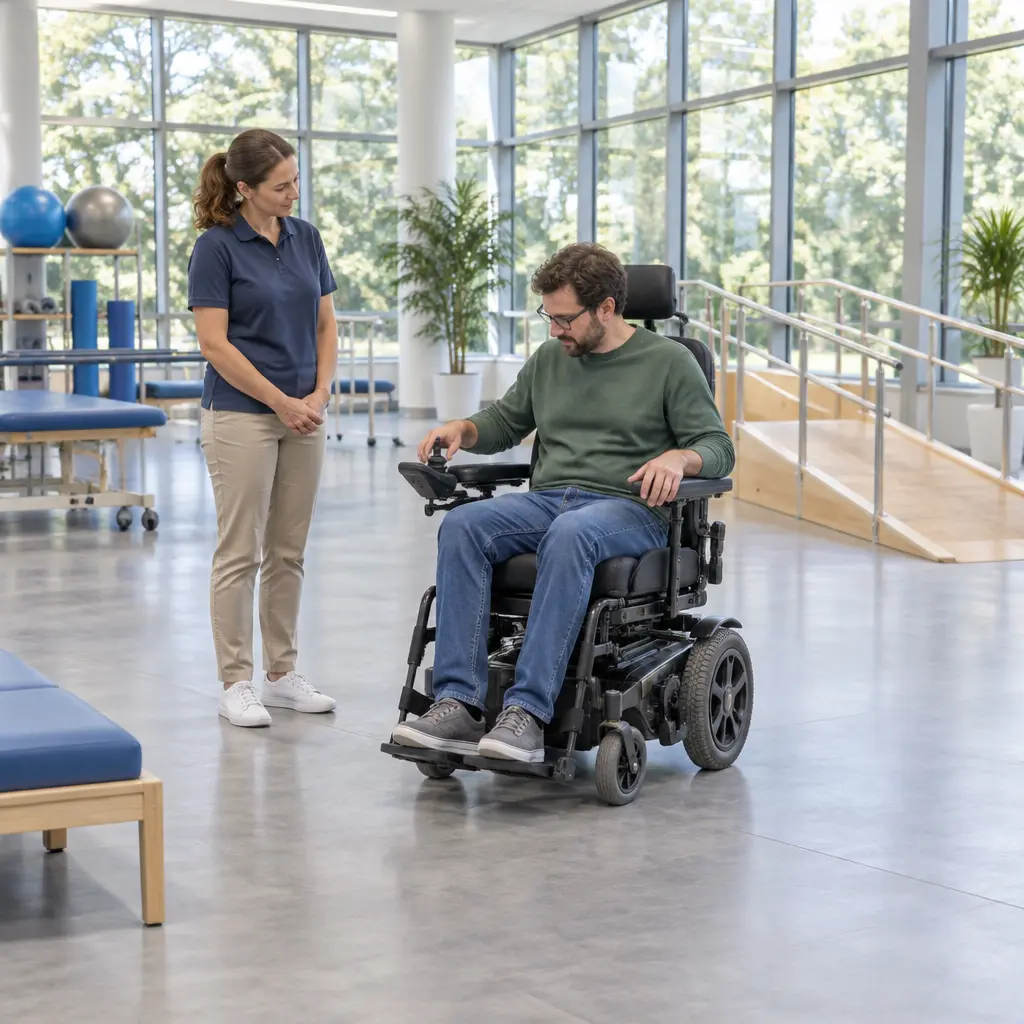
An occupational therapist, physical therapist, assistive technology professional, or wheelchair service team can assess the user’s goals and recommend appropriate equipment. Training should cover basic driving, turning, transfers and positioning considerations, charging, safety features, and what to do when a system signals an error. Follow-up helps identify discomfort, changes in ability, or features that are not working as intended.
The WHO identifies individualized assessment, fitting, training, and follow-up as core components of wheelchair provision. This service-based approach is especially important for smart chairs, where software settings and sensor behavior may add complexity to routine use.
Reliability, privacy, and cost
Sensors and connected features can introduce additional maintenance needs, and electronic systems may be affected by faults, software changes, or depleted batteries. Users should know how to operate the chair safely if an optional smart function is unavailable. For connected products, it is also sensible to ask what data are collected, where they are stored, and who can access them.
Costs vary by product, customization, funding arrangements, and service availability. The WHO reports that access to appropriate wheelchairs is limited for many people who need them; the challenge is not simply whether a device is advanced, but whether users can obtain a suitable chair, repairs, training, and long-term support.
Conclusion: Smart wheelchair technology supports routines when it fits the user
Smart wheelchair navigation can assist with obstacle awareness and maneuvering; personalized controls can match a chair to a user’s abilities; and connectivity may support environmental control and communication. These features can make daily routines more accessible, but they are not substitutes for accessible spaces, individualized assessment, reliable maintenance, or user choice.
Anyone considering a smart wheelchair can start by identifying the routines and environments that matter most, then discuss options with a qualified wheelchair service team. Ask to trial relevant controls, confirm repair and training support, and review privacy and safety considerations before adopting connected features.
Sources: World Health Organization, Wheelchair provision guidelines, 2023, https://www.who.int/publications/i/item/9789240074521; World Health Organization, Assistive technology, https://www.who.int/news-room/fact-sheets/detail/assistive-technology; National Institute of Biomedical Imaging and Bioengineering, Rehabilitation Engineering, https://www.nibib.nih.gov/science-education/science-topics/rehabilitation-engineering; National Institute on Disability, Independent Living, and Rehabilitation Research, Research and Development, https://acl.gov/programs/research-and-development