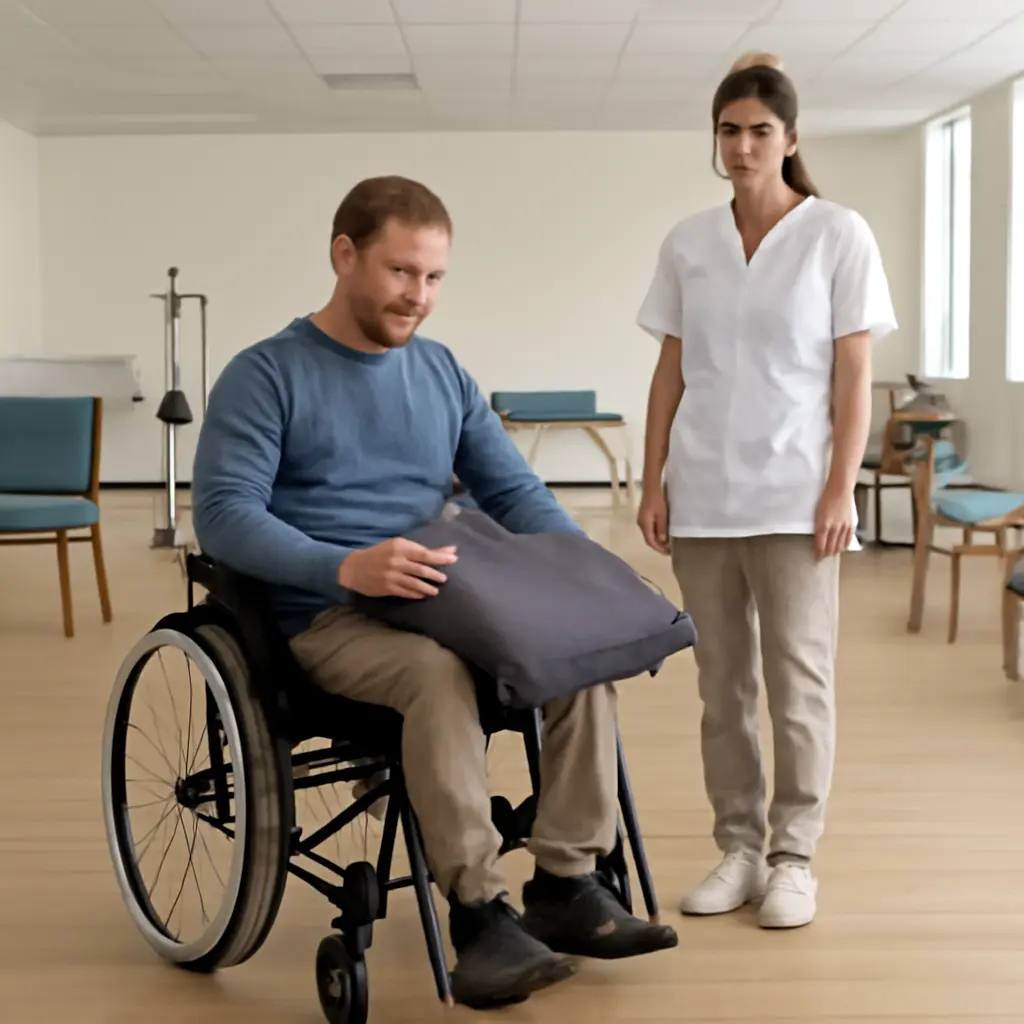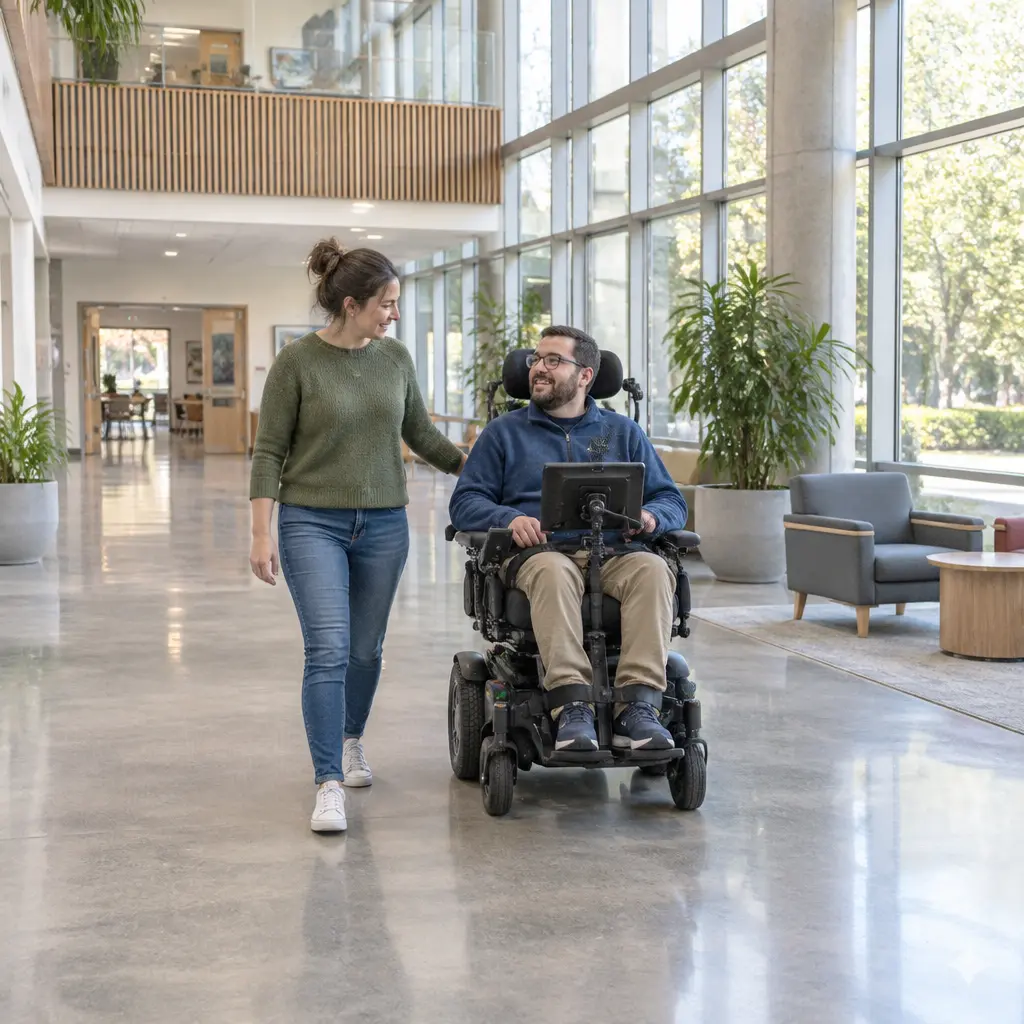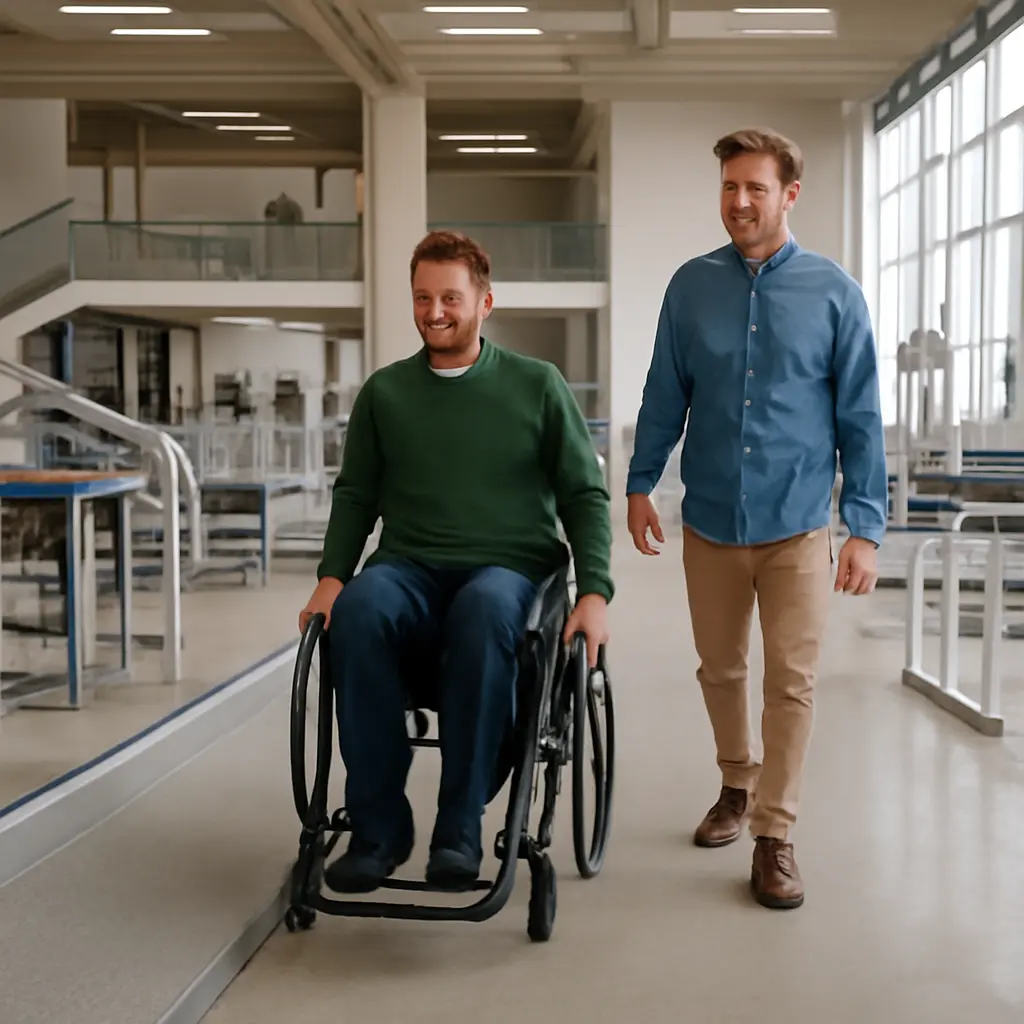
Wheelchair solutions are most effective when the people who use them help shape their design, testing, and delivery. User partnership—also called co-design or participatory design—brings wheelchair users’ knowledge of their bodies, environments, routines, and priorities into decisions that might otherwise be made mainly by clinicians, engineers, or manufacturers. The World Health Organization (WHO) estimates that around 80 million people need a wheelchair worldwide, while access to an appropriate wheelchair remains uneven. Research and practice show why collaboration matters: it can make products and services more usable, safer, and better suited to everyday life, from selecting a basic manual chair to developing powered mobility and digital controls.
Researchers define user partnership in wheelchair design
User partnership means involving people with relevant lived experience as contributors to research and design—not treating them only as test subjects or sources of feedback. The National Institute for Health and Care Research (NIHR) describes public involvement as research carried out “with” or “by” members of the public, rather than “to,” “about,” or “for” them. Applied to wheelchair research, this can mean users help set research questions, select design priorities, interpret findings, and decide how results should be shared.
This partnership is especially important because a wheelchair is not simply a piece of equipment. WHO’s wheelchair service guidance treats provision as a process that includes individual assessment, fitting, training, and follow-up. A chair that performs well in a laboratory may still be unsuitable for a person’s home, work, school, climate, transport options, or physical needs. Working with users connects technical performance to the realities of daily mobility.
Participatory design: users help set the problem
Participatory design gives users an active role in identifying needs and shaping possible solutions. Researchers may use interviews, workshops, mapping exercises, prototypes, or design reviews to learn how wheelchair users navigate particular environments and where existing products or services fall short. The important distinction is influence: consultation gathers opinions, while meaningful participation gives users a way to affect decisions.
For example, a design team developing a wheelchair attachment might initially focus on speed or weight. Users may instead identify storage, transferring, repair access, or compatibility with public transport as higher priorities. Bringing these concerns into the brief early can prevent teams from refining a technically impressive solution that does not address the principal problem.
Co-design: shared decisions throughout development
Co-design is a more intensive form of collaboration in which users and researchers work together across multiple stages, from defining needs to evaluating prototypes. It recognizes that users contribute specialized knowledge about comfort, fatigue, posture, maneuverability, stigma, and the practical demands of daily routines. Researchers contribute methods, engineering expertise, and access to testing and manufacturing resources.
Effective co-design also makes participation accessible. Teams may need to provide transport, accessible venues, interpreters, communication support, compensation, and flexible meeting formats. These are not optional extras: without them, the people most affected by a design may be unable to participate, and the research may reflect only a narrow range of experiences.
Researchers translate wheelchair users’ experience into design requirements
The next step is converting lived experience into specific, testable requirements. A user’s account of difficulty crossing a threshold, reaching a work surface, or maintaining comfort over a long day can guide decisions about dimensions, seating, controls, materials, or service delivery. This translation works best when researchers check their interpretations with participants rather than assuming that a single observation represents everyone.
Needs assessment and individual fit
Needs assessment identifies the user’s goals, physical characteristics, environment, and expected wheelchair use. WHO’s wheelchair provision guidance emphasizes that an appropriate wheelchair should match an individual’s needs and environmental conditions, and that users should receive fitting, training, and follow-up. This is why a universal “best chair” is rarely a useful research target: appropriate solutions depend on the person and context.
Researchers can investigate these factors through observation, interviews, mobility diaries, and trials in real settings. Such methods can reveal details that a brief clinic assessment may miss—for instance, how a person manages uneven sidewalks, carries belongings, transfers at home, or handles a chair when public transport is crowded.
Accessibility, comfort, and everyday environments
Accessibility describes how well a wheelchair and its surroundings enable a person to move, participate, and carry out daily activities. It includes more than doorway width: terrain, slopes, seating, weather, charging access, storage, and the availability of repairs can all shape whether a design works in practice. User-led research helps teams test equipment in the environments where it will actually be used.
Comfort is similarly context-dependent. Seating pressure, posture, vibration, heat, and fatigue may affect users differently, so designers should avoid relying only on standardized measurements or short demonstrations. Repeated feedback from a diverse group of users helps expose trade-offs and identify adjustments that improve sustained use.
Safety, independence, and dignity
Safety considerations include stability, braking, transfers, control reliability, and the risks associated with a particular user’s abilities and surroundings. Independence and dignity matter alongside injury prevention: a solution may be technically safe but still place unnecessary limits on where someone can go or require avoidable assistance. User partnership helps researchers evaluate these outcomes together rather than treating safety as the only measure of success.
This broader evaluation is consistent with the Convention on the Rights of Persons with Disabilities, which recognizes personal mobility and independent living as important rights. In research, that perspective supports asking not only whether a chair works, but whether it expands participation and gives users meaningful control over their mobility.
Researchers validate wheelchair solutions through testing and iteration
After requirements are established, researchers build or adapt prototypes, test them, and revise them based on evidence. User testing can identify problems in controls, transfers, comfort, maintenance, or environmental performance that may not appear in a specification sheet. Repeated cycles—design, trial, feedback, and redesign—help ensure that findings influence the product rather than being collected too late to matter.
Prototype testing in real-world conditions
Prototype testing evaluates an early version of a design before it is finalized. Researchers may combine laboratory measures, such as force or stability, with user observations and trials in homes, streets, workplaces, or other relevant settings. A mixed approach can show both whether a device meets technical criteria and whether it supports the activities users value.
For example, a powered-chair feature may perform as intended on a smooth test surface but prove difficult to operate on a ramp or in a crowded room. Testing with users in varied conditions can reveal these limitations early, when changes are still feasible. Studies should also document who participated, what conditions were tested, and whose needs remain underrepresented.
Inclusive recruitment and representative evidence
Inclusive recruitment aims to involve people with different disabilities, ages, body sizes, living situations, levels of technology access, and cultural backgrounds. No small group can represent every wheelchair user, but researchers can be transparent about the limits of a sample and deliberately seek perspectives that are often excluded. This matters because designs based on a narrow group may work poorly for people whose needs differ.
Partnership also requires recognizing varied communication and decision-making needs. Some participants may use augmentative communication, need additional time, or prefer support from a trusted person. Designing research sessions around those needs improves access and helps ensure that feedback reflects participants’ views rather than the convenience of the research team.
Follow-up, maintenance, and service delivery
A wheelchair solution includes the services that keep it fitted, functional, and safe over time. WHO’s guidance includes training and follow-up because users may need adjustments, repairs, replacement parts, or further instruction after receiving a chair. Researchers who track outcomes beyond an initial fitting can learn whether a design remains useful as users’ needs or environments change.
Follow-up can also expose system-level barriers, such as long repair waits or limited access to trained providers. These findings may point to improvements in service design, procurement, or training—not just product redesign. A user partnership therefore can improve the whole mobility pathway, from assessment to ongoing support.
Case examples show how partnership improves wheelchair research
Real-world projects illustrate how collaboration connects design choices to users’ goals. The examples below represent different forms of partnership: developing lower-cost mobility technology, strengthening evidence and guidance, and shaping research around users’ everyday experience.
The Whirlwind wheelchair and locally appropriate design
The Whirlwind Wheelchair International project is a well-known example of designing mobility equipment for varied environments and local manufacturing conditions. Its approach has emphasized durable, repairable designs and collaboration with users and local partners. The broader lesson is that affordability and suitability depend not only on the chair’s initial price, but also on whether it can be maintained, repaired, and used in the settings where people live.
This case also shows why designs cannot simply be transferred unchanged between settings. Terrain, supply chains, repair skills, and user priorities differ. Research partnerships with local users and service providers can identify which features need adaptation and which design decisions support long-term use.
WHO wheelchair guidance and user-centered provision
WHO’s Guidelines on the Provision of Manual Wheelchairs in Less Resourced Settings frame wheelchair provision as more than product distribution. Assessment, fitting, training, and follow-up are core steps, supported by appropriately trained personnel. This service model reflects the practical insight that a wheelchair must be matched to an individual and supported after delivery to achieve its intended benefits.
The WHO estimate that roughly 80 million people need a wheelchair underscores the scale of the challenge. Need alone does not guarantee access to an appropriate product or service; research partnerships can help identify local barriers and test solutions that are feasible in specific health systems and communities.
User-informed measures of success
A user-informed study evaluates outcomes that matter in everyday life, such as comfort, confidence, participation, independence, and the ability to complete valued activities. These measures complement engineering outcomes such as weight, durability, and maneuverability. Researchers can use interviews and validated assessment tools together, then ask users whether the results accurately describe their experience.
A useful article illustration would be a comparison chart with two columns: “technical measures” and “user-prioritized outcomes.” The chart could show how measures such as turning radius and battery life connect to outcomes such as navigating a home or reaching work and community activities.
Strong wheelchair partnerships address power, access, and accountability
Partnership is not automatically equitable. Researchers control budgets, timelines, publication decisions, and access to technical resources, while users may be asked to contribute substantial expertise without payment or influence. Clear roles, accessible participation, fair compensation, and transparent decision-making help shift collaboration from symbolic consultation toward shared work.
Compensation, credit, and shared governance
Compensation recognizes the time and expertise users contribute, including preparation, travel, and follow-up. Shared governance means participants have an agreed role in decisions—for example, setting priorities, reviewing participant materials, interpreting results, or advising on dissemination. Researchers should clarify expectations at the start and explain how user input changed the project.
Accessible communication and ethical practice
Accessible research communication includes plain-language materials, usable digital documents, alternative communication formats, and enough time for informed participation. Ethical partnership also protects privacy and gives participants a clear understanding of risks, data use, and the limits of their influence. These practices strengthen trust and make research findings more credible.
From feedback to documented change
Researchers can make partnership accountable by recording what users recommended, what changed, and why some suggestions could not be adopted. A short feedback report after each design cycle lets participants see how their contributions were used. This closes the loop and gives teams a practical way to assess whether collaboration shaped the outcome.
Conclusion: user partnership makes wheelchair solutions more relevant
Researchers partner with wheelchair users through participatory design, co-design, needs assessment, prototype testing, inclusive recruitment, and long-term follow-up. These approaches connect technical decisions to comfort, safety, independence, accessibility, and the demands of daily life. WHO’s estimate that about 80 million people need wheelchairs highlights why appropriate equipment and effective services matter at global scale.
The broader implication is that wheelchair users are essential research partners, not merely end recipients. Research teams, manufacturers, service providers, and funders can strengthen their work by involving users early, compensating them fairly, testing in real environments, and showing how feedback changes decisions. Readers can learn more by consulting WHO wheelchair provision guidance and NIHR resources on public involvement, or by asking local mobility services how wheelchair users participate in design and evaluation.
Sources: World Health Organization, Wheelchair provision, https://www.who.int/news-room/fact-sheets/detail/wheelchair-provision; World Health Organization, Guidelines on the Provision of Manual Wheelchairs in Less Resourced Settings, https://www.who.int/publications/i/item/9789241547482; National Institute for Health and Care Research, Briefing notes for researchers: public involvement in NHS, health and social care research, https://www.nihr.ac.uk/documents/briefing-notes-for-researchers-public-involvement-in-nhs-health-and-social-care-research/27371; United Nations, Convention on the Rights of Persons with Disabilities, https://www.un.org/development/desa/disabilities/convention-on-the-rights-of-persons-with-disabilities.html; Whirlwind Wheelchair International, About Whirlwind, https://whirlwindwheelchair.org/about/